

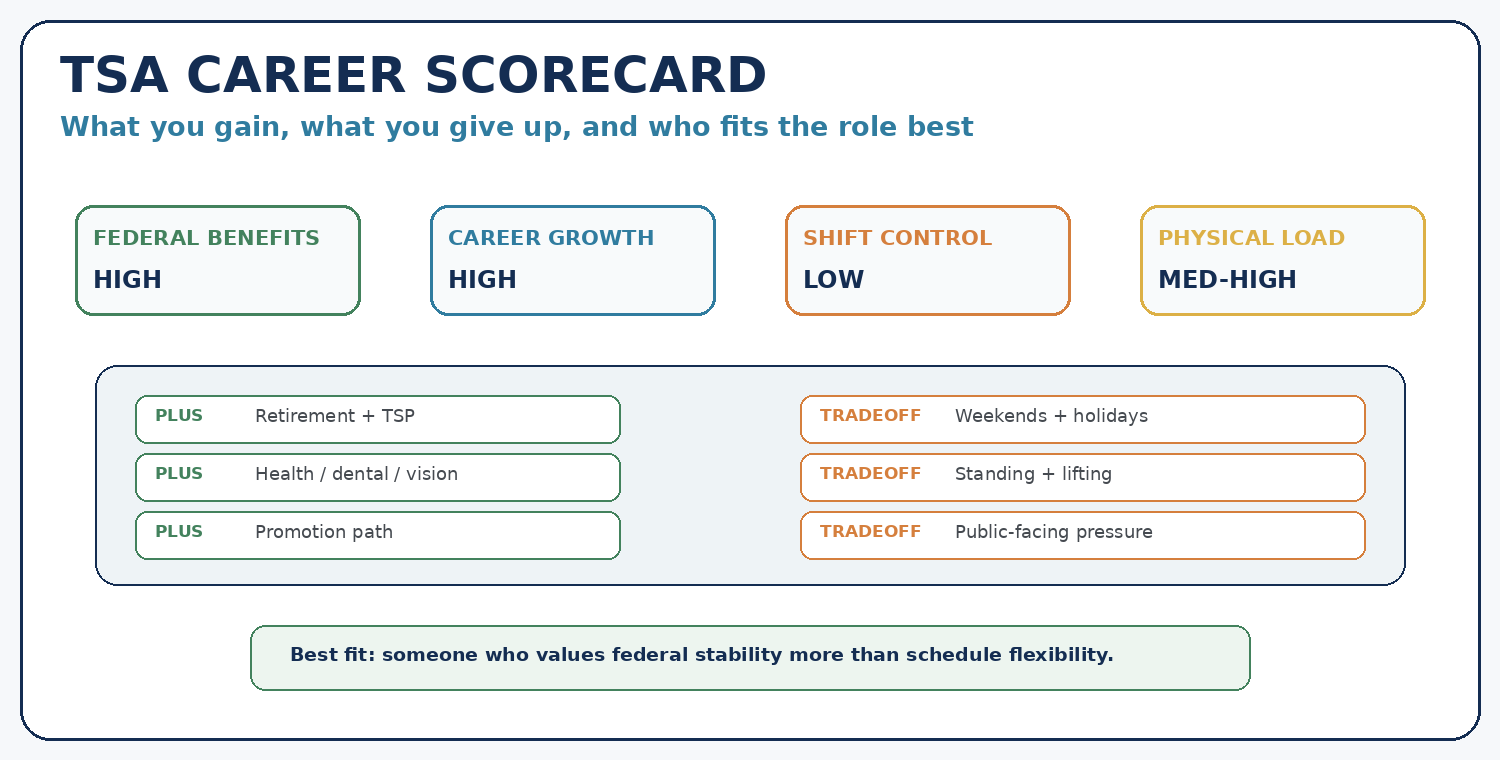
Career scorecard for applicants comparing federal benefits, advancement, schedules, physical demands, and airport work culture
|
|
|
|
|
Who Usually Likes TSA Work?
TSA tends to fit people who want federal employment, can handle structured security procedures, and do not need a traditional weekday schedule. Transportation Security Officers work in a highly visible airport environment where accuracy, professionalism, and consistency matter every day.
Before app, compare current Tsa Jobs by airport because pay, schedule, parking, commute, and staffing conditions differ by location.
The Strongest Advantages
One additional advantage is portability within the federal system. Experience in a TSA screening role can strengthen an employee's understanding of federal procedures, security standards, documentation, and public-facing operations. That experience can support future applications to other TSA functions or different federal agencies, depending on qualifications. Employees who build a strong record in attendance, conduct, and performance may find that the role becomes more valuable over time than it first appeared from the starting pay alone.
Federal Benefits
TSA employees can access federal health, dental, vision, life, and long-term care insurance options. The package also includes retirement participation and the Thrift Savings Plan, which adds long-term value beyond hourly or annual pay.
Retirement and TSP
For applicants planning a longer career, the retirement structure is one of the biggest advantages over many private airport-security employers. The TSP gives employees a federal workplace savings option similar to a private 401(k).
Clear Advancement Routes
Entry-level TSOs can move into Lead TSO, Supervisory TSO, management, training, inspection, and specialized security roles. The job can therefore become a starting point for a broader federal security career.
Accessible Entry Requirements
A four-year college degree is not required for entry-level TSO hiring. TSA recruits from a wide range of backgrounds, which makes the role accessible to applicants who meet citizenship, age, education, screening, and medical requirements.
Mission-Focused Work
The work has a direct public-safety purpose. Officers help prevent prohibited items and threats from moving through the transportation system while supporting secure passenger travel.
The Main Tradeoffs
Another tradeoff is that airport staffing needs can change quickly. A shift that feels manageable during a slower travel period may become much harder during holidays, summer travel, weather disruptions, or staffing shortages. The pace can increase without the basic security rules becoming more flexible. That means officers must keep the same level of attention when lines are longer and travelers are more impatient. Some employees thrive in that environment, while others find the constant operational pressure tiring.
Limited Schedule Control
Airports operate early, late, on weekends, and on holidays. New officers may receive less desirable shifts based on staffing needs and seniority. This is the biggest drawback for applicants who need a fixed family or school schedule.
Physical Demands
TSOs stand for long periods, move bins and baggage, perform pat-down screening, bend, reach, walk, and repeat the same motions throughout a shift. Some screening duties require lifting or handling baggage up to job-related limits.
Public-Facing Pressure
Travelers are not always calm. Officers deal with delayed passengers, confused travelers, rule disagreements, missed flights, and high-volume holiday periods. Staying professional under pressure is a core part of the job.
Longer Hiring Process
Federal hiring includes eligibility checks, assessments, medical review, drug screening, fingerprinting, and a background investigation. Private airport employers often hire faster.
Emergency and Attendance Expectations
Airport operations do not stop easily. At some locations, employees are treated as emergency personnel and may be expected to report during weather events or other disruptions.
What the Job Feels Like Day to Day
Rotations are common because officers may move between checkpoint functions during a shift. That variety helps reduce repetition, but it also means employees need to stay familiar with multiple procedures. New hires should expect coaching, observation, and structured training before working independently. The ability to accept correction without becoming defensive is important because screening work depends on consistency across the team.
|
|
|
|
When TSA Is a Good Career Choice
- You want federal health and retirement benefits.
- You are comfortable with weekends, holidays, or early shifts.
- You want a security career ladder without needing a four-year degree.
- You remain calm when people are frustrated.
- You prefer structured procedures and clear rules.
- You are comfortable with standing, lifting, and repetitive screening tasks.
When Another Airport Job May Fit Better
- You need a fixed Monday-to-Friday schedule.
- You need complete control over childcare or school hours.
- You prefer low-contact work with fewer travelers.
- You want a shorter hiring process.
- You have physical limitations that conflict with screening duties.
In those cases, compare other Airport Security Jobs including contractor security, airport authority, passenger service, operations, baggage, and support roles.
A Simple Decision Test
|
|
|
|
|
|
|
|
|
|
|
|
|
|
|
|
|
|
For current federal career information, review TSA’s official Careers at TSA page, which explains security roles, career progression, and agency opportunities.
Frequently Asked Questions
Is TSA a good long-term career?
It can be, especially for applicants who value federal benefits, retirement, and promotion opportunities.
Do TSA officers work weekends?
Yes. Airport operations require weekend, holiday, early-morning, and late-shift coverage.
Is the job physically demanding?
Yes. Standing, lifting, screening, bending, and repetitive movement are common parts of the role.
Can you move up from TSO?
Yes. Common advancement paths include Lead TSO, Supervisory TSO, management, training, and specialized security work.
What is the biggest downside?
For many applicants, limited schedule flexibility is the hardest tradeoff.
Bottom Line
TSA offers a strong federal employment package and a visible path into longer-term security work. Its weaknesses are equally clear: irregular schedules, physical demands, public pressure, and a hiring process that takes more time than many private airport jobs. For applicants who value federal stability and advancement more than schedule flexibility, TSA remains a strong career option in 2026

Leave a Reply